IMPLICIT
RESPONSE SURVEYS

What is implicit research – and how does it get closer to the truth?

Consumers don’t always say what they really think. Humans have a strong tendency to second guess how they really feel and can fabricate and embellish without really intending to. This can unwittingly have an impact on the outcome of research.

How do we fix this as researchers? Many of the feelings and associations that influence our decisions are automatic and can’t be accessed easily. Implicit response surveys are designed to get beneath conscious answers, measuring rapid, instinctive reactions to reveal how people genuinely respond to brands, products, packaging, advertising and more.

The result? A deeper understanding of what people feel – not just what they say.

WHAT IS
IMPLICIT RESEARCH?

Traditional surveys ask people to rationally consider their answer to a question. Implicit research takes a different approach.

Instead of relying solely on what respondents can consciously tell us, implicit techniques measure the speed and pattern of their responses to different stimuli. These rapid responses can reveal the strength of underlying associations and attitudes.

It means researchers can explore the instinctive feelings consumers have towards a brand, product or idea without asking them to explain those feelings.


THINK
FAST

Implicit research is built around the fact that brand associations can be activated rapidly and automatically.

A brand logo, product, image or word can trigger these associations, which are built up though our experiences with the brand. These can be felt as intuitions or “gut reactions” that are difficult to describe verbally.

Reaction-time testing provides a way to measure those associations. Split Second Research’s implicit tests present stimuli rapidly and measures how quickly and accurately respondents complete a task. Differences in those response times provide insight into the associations being activated.


CLOSING THE
TRUTH GAP

There can be a gap between what consumers tell researchers and how they actually feel or behave. Split Second Research describes this as the truth gap.

Direct questions depend on people understanding their own response, being able to articulate it and reporting it accurately. Implicit research reduces that reliance on conscious self-report.

By measuring automatic responses instead, it can uncover another layer of consumer understanding – including emotions, intuitions and gut feelings that conventional questions can struggle to reach.

HOW DOES IT
WORK

Split Second Research uses implicit reaction-time testing to measure consumers’ associations with different stimuli.

In its affective priming approach, for example, a respondent is shown a “prime”, such as a brand logo or image, followed by another stimulus that they must identify as quickly as possible.

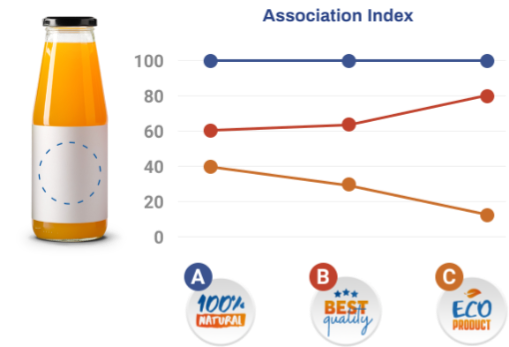
The important measure is reaction time. Across repeated trials and respondents, differences in the speed of responses reveal how strongly particular attributes are associated with a brand or other stimulus.

Crucially, respondents aren’t simply being asked, “How do you feel about this?” The insight comes from their performance on the task itself.

WHAT CAN
YOU TEST

Implicit response testing can be applied across a wide range of marketing questions.

Split Second Research uses implicit testing to evaluate areas including brands and brand positioning, packaging, product claims, logos, advertising, website and product experiences, brand tracking and new product development.

That makes it possible to investigate questions such as which qualities consumers instinctively associate with a brand, how a new pack changes perception, or what emotional response a piece of communication creates.

Rather than relying on claimed preference alone, the research can explore the associations sitting behind it.

IMPLICIT +
EXPLICIT

Implicit research doesn’t mean traditional surveys no longer have a role.

Explicit questions can be valuable for understanding conscious opinions, shopping behaviour and attitudes that respondents can readily report. Implicit measures explore a different layer: the automatic associations and feelings that may be difficult to consciously access or explain.

Split Second Research uses both approaches, including testing the same attributes explicitly and implicitly to explore where responses align – and where consumers may be overstating or understating particular brand values.

Bringing these different measures together can provide a richer picture of the consumer: what they say, what they consciously think and what their rapid responses reveal.

And that can get you closer to the truth.

When traditional surveys do and don’t work and what are the alternatives.

QUESTION

RESPOND

ASSESS

What is implicit research and how does it get closer to the truth?

SUBCONSCIOUS

INSTINCTIVE

TRUTH

Discover what grabs consumers’ attention and which visual elements make the difference.

COMPARE

REVIEW

DECIDE

How to measure a complex emotional response and its effect on buying decisions.

TEST

UNDERSTAND

DELIVER

    WE BRING
    IDEAS TO LIFE

    Communication done well, whether in words, images, video, or in person, can stop people in their tracks, change their minds, and inspire them to take action.